The Minibus, Made for Small Groups
For a family reunion, a hen weekend, a walking club or a squad of sixteen, the minibus is the natural choice. It seats from 16 to 19 passengers besides the driver, and the whole group chats on the way instead of splitting across taxis.
Seats first, then suitcases
Count people, then count bags. The rear luggage space is roomy with a few seats empty and tight when every one is taken, so a full minibus on an airport run may call for a bigger vehicle or a second car.
Typical models
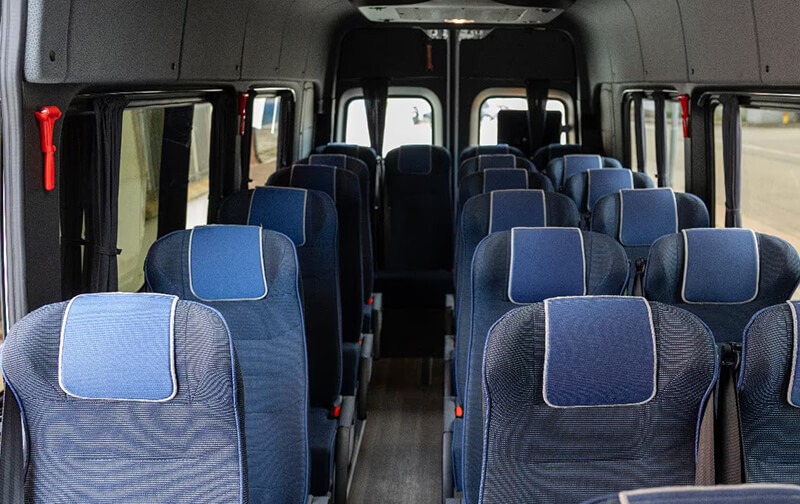
The photos show typical models in this size. Which vehicle runs depends on the partner operator that takes the booking.
Minibus (16 to 19 seats)
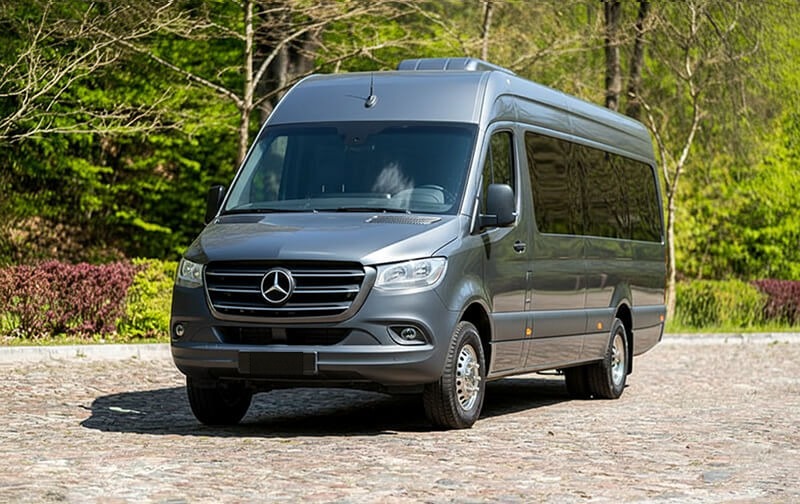
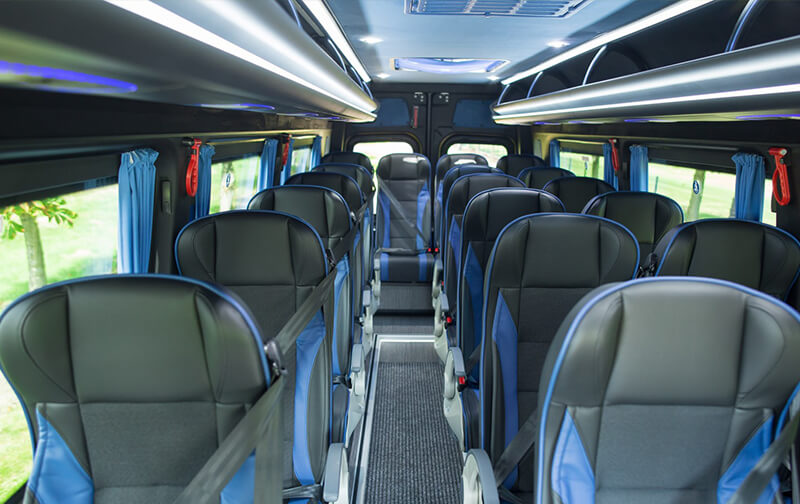
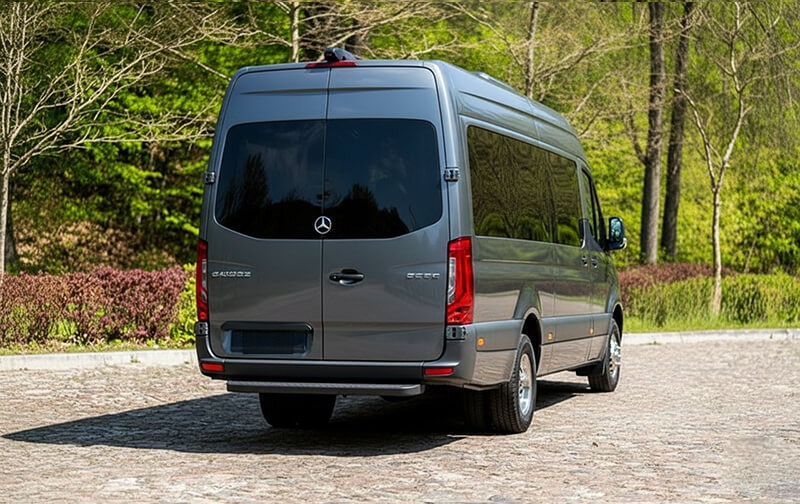
Mercedes Sprinter
19 passengers · 15 bags
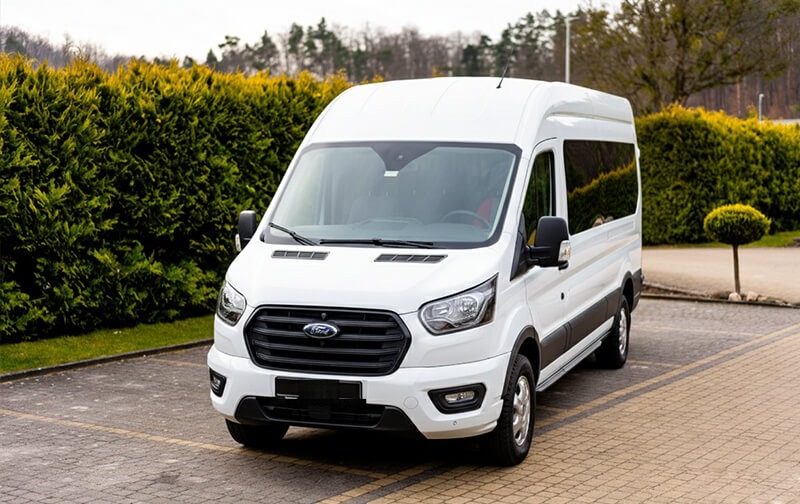
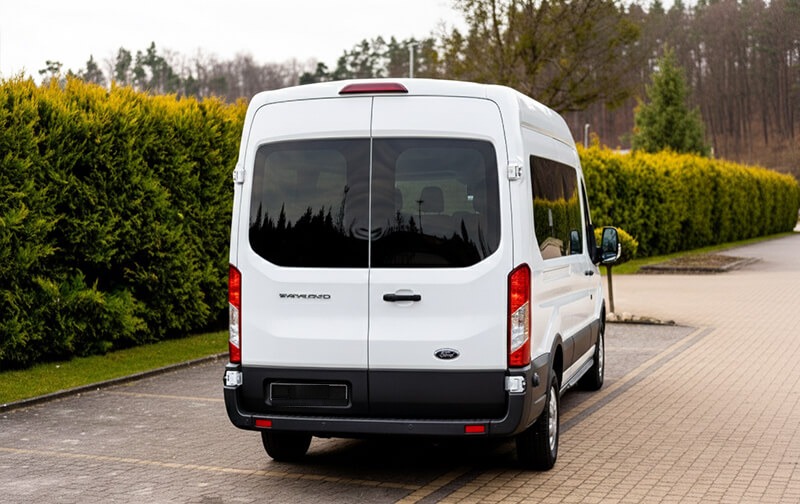
Ford Transit
16 passengers · 12 bags
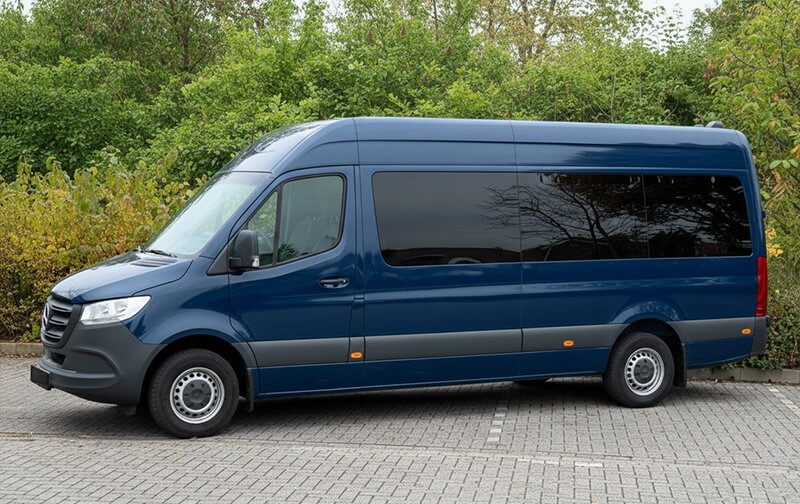
Mercedes Sprinter
17 passengers · 14 bags
On board
- In vehicles with more than nine seats, children aged three or over who are 135 cm tall or shorter use an approved child restraint suited to their size and weight; where none is available they use the seat belt, if it suits their size and weight (RGC art. 117.2)
- Seat belts must be worn wherever they are fitted
- With more than 9 seats including the driver, a minibus counts as a bus (autobús) and is run under a public transport authorisation
- Category D1 covers vehicles built for up to 16 passengers besides the driver and up to 8 m long, so it suits a 16-passenger minibus; one for 17 to 19 passengers needs category D, for more than eight passengers besides the driver. For D1 the minimum age is 21, or 18 for holders of the CAP professional qualification obtained through the ordinary initial qualification, who may then drive only within Spain until they are 21 (Reglamento General de Conductores, art. 4)
Who drives it
A minibus for 16 passengers and up to 8 m long is driven on a D1 licence; one for 17 to 19 passengers needs a full category D. D1 drivers are usually at least 21; a professional who passed the full initial CAP course can start at 18, though only on Spanish roads until turning 21. With more than nine seats a minibus counts as a bus, so it runs under a public transport authorisation.
Children and belts
Belts must be worn wherever fitted. Little ones need thought too: a child of three or more who measures up to 135 cm rides in an approved seat matched to their size where the vehicle has one, and otherwise in a belt that fits them. Tell us the children's ages so the operator can say which restraints it can supply.
Small, but still a bus in town
Small does not mean exempt. Barcelona's Zona Bus counts any vehicle from nine seats upward, minibuses included, so a stop at Park Güell or the Sagrada Família is booked just as a coach would book it. Low-emission zones depend on the vehicle's DGT label and on each city's ordinance, and the operator checks both.
What travellers ask us
Is a minibus the same as a van with a driver?
Not quite. Up to nine seats including the driver, a van-type vehicle is hired as a car with driver under the VTC rules. With more seats it is a minibus, run as a bus.
Can a minibus get closer than a coach?
Often, yes, on narrow roads and at small venues. Restricted old towns still need an access permit, which the operator arranges where one is available.
How many suitcases will fit?
It depends on the model and on how many seats are filled. Give us the luggage count with your enquiry and the quote names a vehicle that suits it.
More trips we can arrange
- Team Days Out, with Someone Else at the Wheel
- Class Outings Planned Around Spain's School Rules
- Getting the Squad to the Match Together
- Wedding Transport for the Guests and the Couple
- Wine Country While Someone Else Drives
- Day Trips from the City at Your Own Pace
- From the Ship to the Hotel, Airport or Hills
- Travelling Together When Someone Uses a Wheelchair